
Concrete
CONCRETE WORK IN DUDLEY, MA
Exterior concrete in a freeze and thaw climate needs air entrainment, microscopic bubbles mixed into the paste that give freezing water somewhere to expand. Leave them out and the finished surface starts flaking and spalling after only two winters. Bowden and Son LLC pours driveways, walkways, patios, steps, footings, and foundation repairs across Dudley, MA, Webster, Oxford, Charlton, and Southbridge.
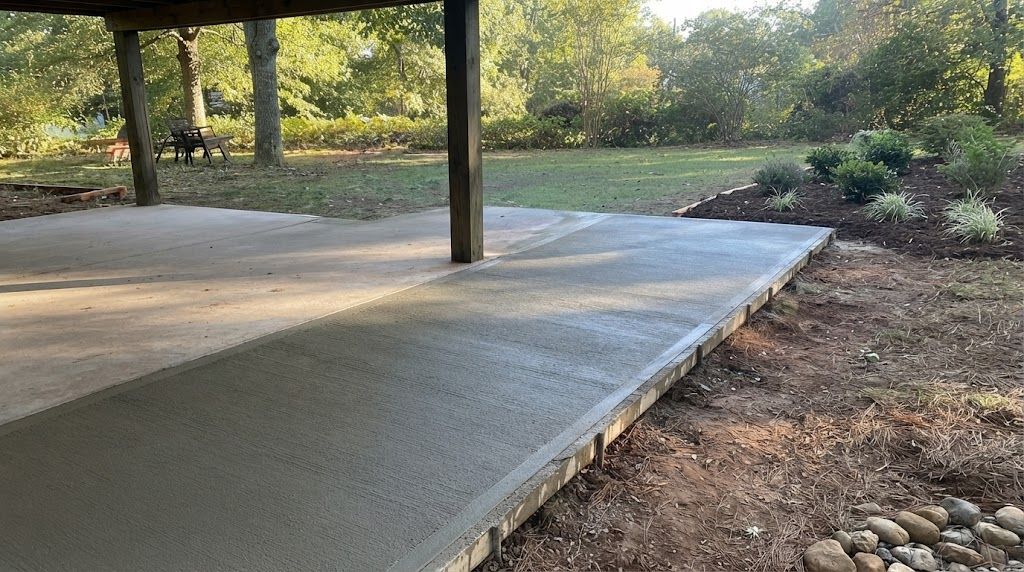
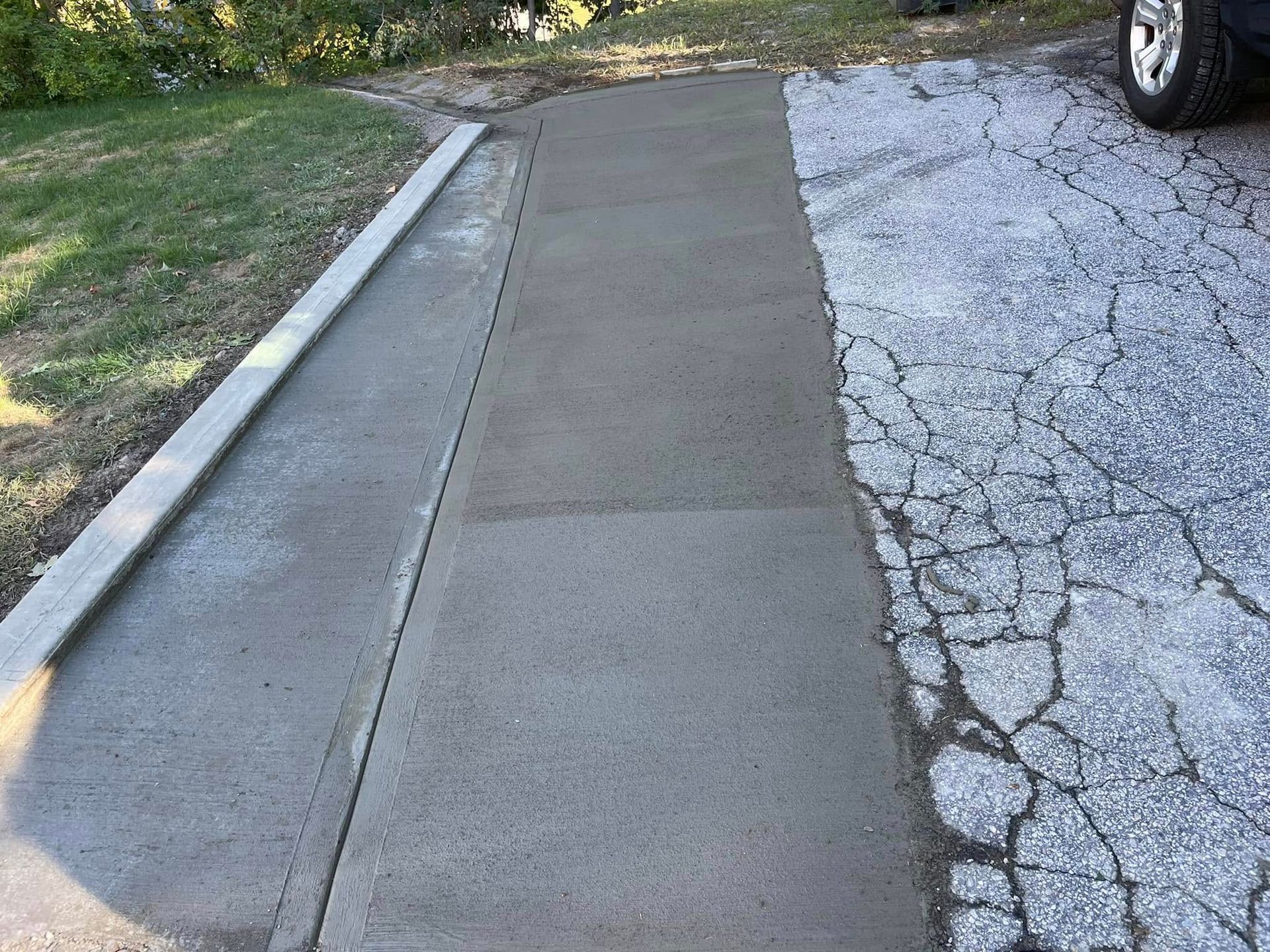
CONCRETE ONLY GETS ONE CHANCE TO BE RIGHT.
Good flatwork is decided before the truck arrives. Excavation to the right depth, a compacted gravel base, forms set true with the correct pitch for drainage, and reinforcement where the loading calls for it. Once concrete is in the forms, every mistake underneath it is permanent.
We also joint on a spacing that matches the slab thickness, cut early rather than the next day, and keep deicing salt off a first-winter surface. Those three habits prevent most of the cracking homeowners blame on bad luck.
- Air-entrained mixes specified for exterior work
- Compacted base and forms checked for pitch
- Control joints cut on correct spacing and depth
- Broom finish for traction on walks and drives
CONCRETE
CONCRETE DOES NOT FAIL. IT GETS SET UP TO FAIL.
Almost every cracked, heaved, or spalling slab we replace failed for one of four reasons: it was poured on uncompacted fill, it was jointed too far apart or too shallow, it was the wrong mix for outdoor exposure, or it was salted the first winter of its life. None of those are mysteries and none of them are unavoidable. They are decisions made at the estimate stage, and we make them out loud with you before anything gets ordered.
FROST HEAVE IS THE LOCAL ENEMY.
The frost line here runs to roughly 48 inches, deep enough that anything bearing structural load has to reach below it or move every spring. Steps pull away from the house. Footings lift. A slab poured on ground that traps water finds the same trouble. We dig footings to depth, build a base that drains rather than holds, and pitch the surface away from the foundation so meltwater has somewhere to go.
THE POUR IS EASY. THE PREP IS WHERE THE JOB IS WON.
Finishing concrete is a timing skill you learn by ruining a few slabs early in a career and never forgetting it. Read the surface wrong and you seal bleed water under the finish. Wait too long and you fight the whole pad. Our crew has been placing and finishing exterior concrete in this climate for 30 years, in heat, in wind, and in the narrow spring and fall windows that New England allows. Want your slab looked at before it gets worse?
WHAT A PROPERLY POURED SLAB DELIVERS.
Surfaces that survive the salt trucks
An air-entrained mix and a sealed surface resist the freeze and thaw cycling that turns ordinary concrete chalky and pitted within a handful of New England winters.
Cracks that go where you put them
Control joints give the slab a planned place to relieve stress, so the inevitable movement shows up in a straight tooled line instead of a random break across the middle.
Water directed away from your foundation
Correct pitch on a drive, walk, or patio sends runoff and snowmelt out toward the yard rather than pooling against the sill and finding its way into the basement.
Footings that hold their elevation
Bearing below the frost line keeps steps, posts, and slabs from lifting each spring, which is the single most common reason older exterior concrete separates from a house.
Traction underfoot in January
A broom finish gives a walkway real grip when it is wet or icy, and it hides minor surface variation far better than a smooth troweled finish ever does.
Decades of service, not seasons
Properly mixed, placed, jointed, and cured concrete is measured in decades of use, which makes the prep work the least expensive part of the whole investment.
WHAT WE POUR
OUR CONCRETE WORK
Flatwork, structural footings, steps, and repair, all placed by our own crew. Below is the range we take on for homeowners and commercial properties around Dudley.
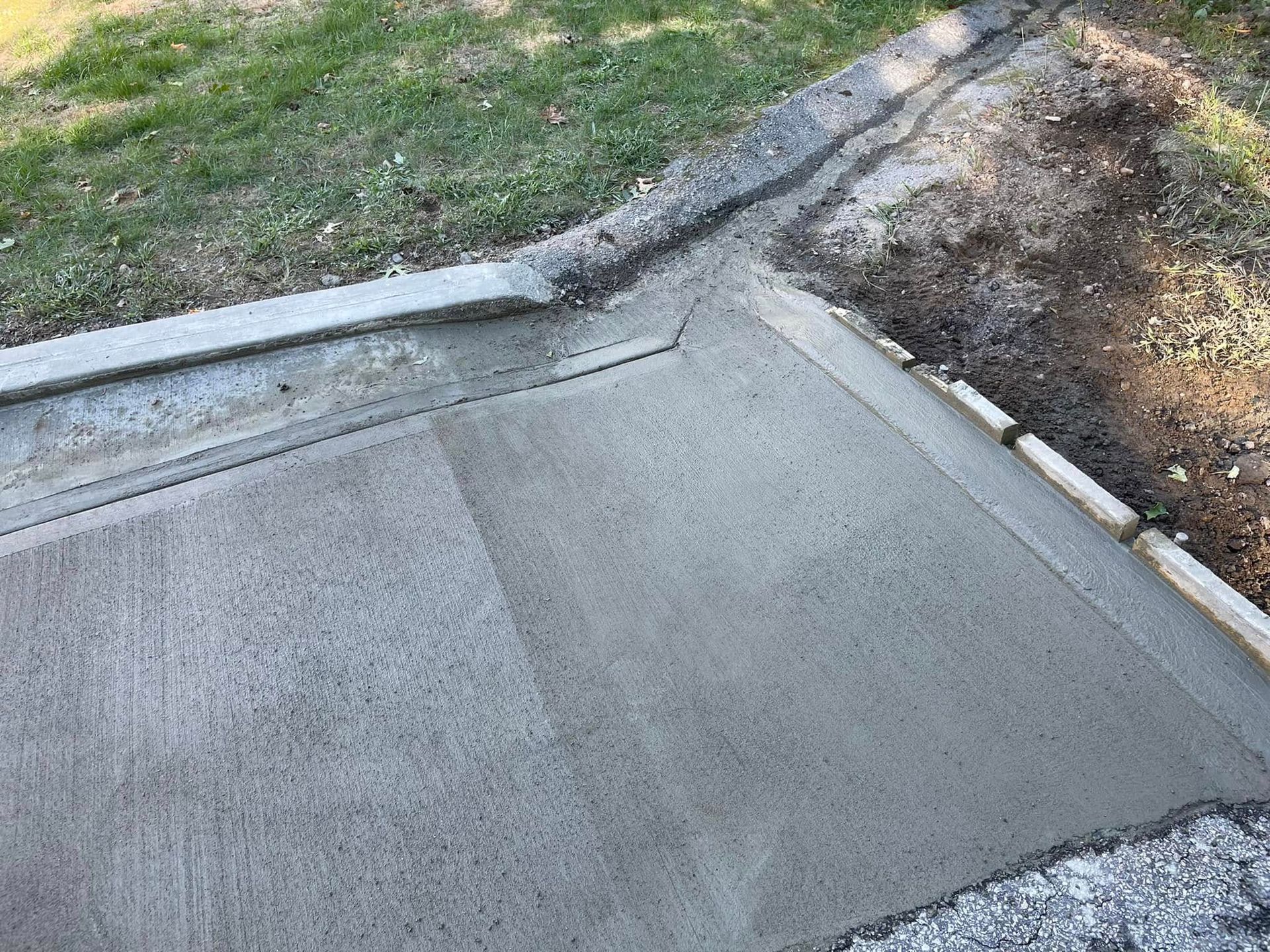
DRIVEWAYS
Concrete Driveway Installation
Excavated and compacted base, four inches or more of slab depending on the vehicles it carries, reinforcement where the loading warrants it, and joints laid out on a grid that suits the pour.
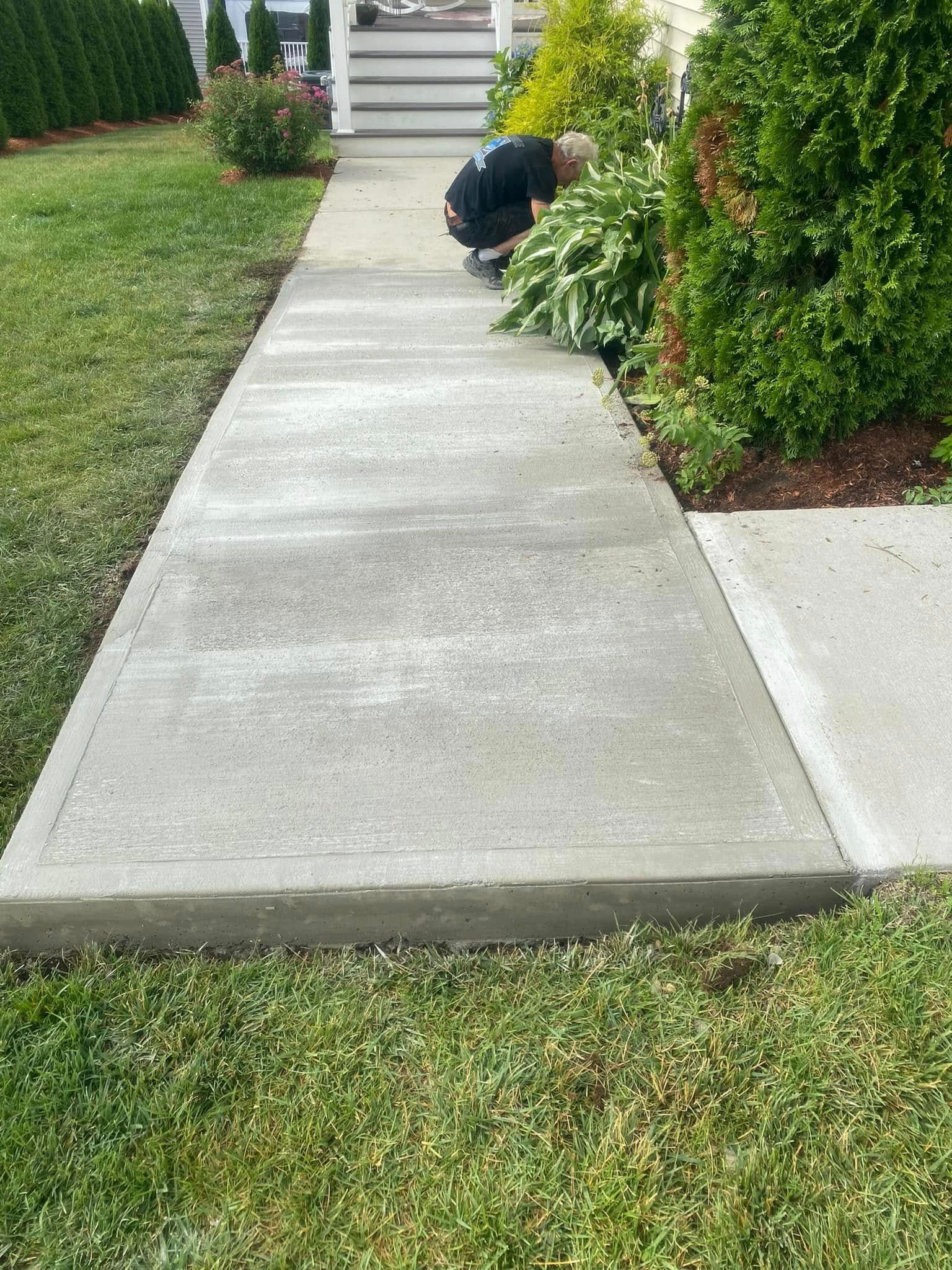
WALKWAYS
Concrete Walkway Installation
Paths poured with consistent width and a broom finish for grip, pitched to shed water away from the house, and jointed at intervals that keep the runs from cracking between them.
PATIOS
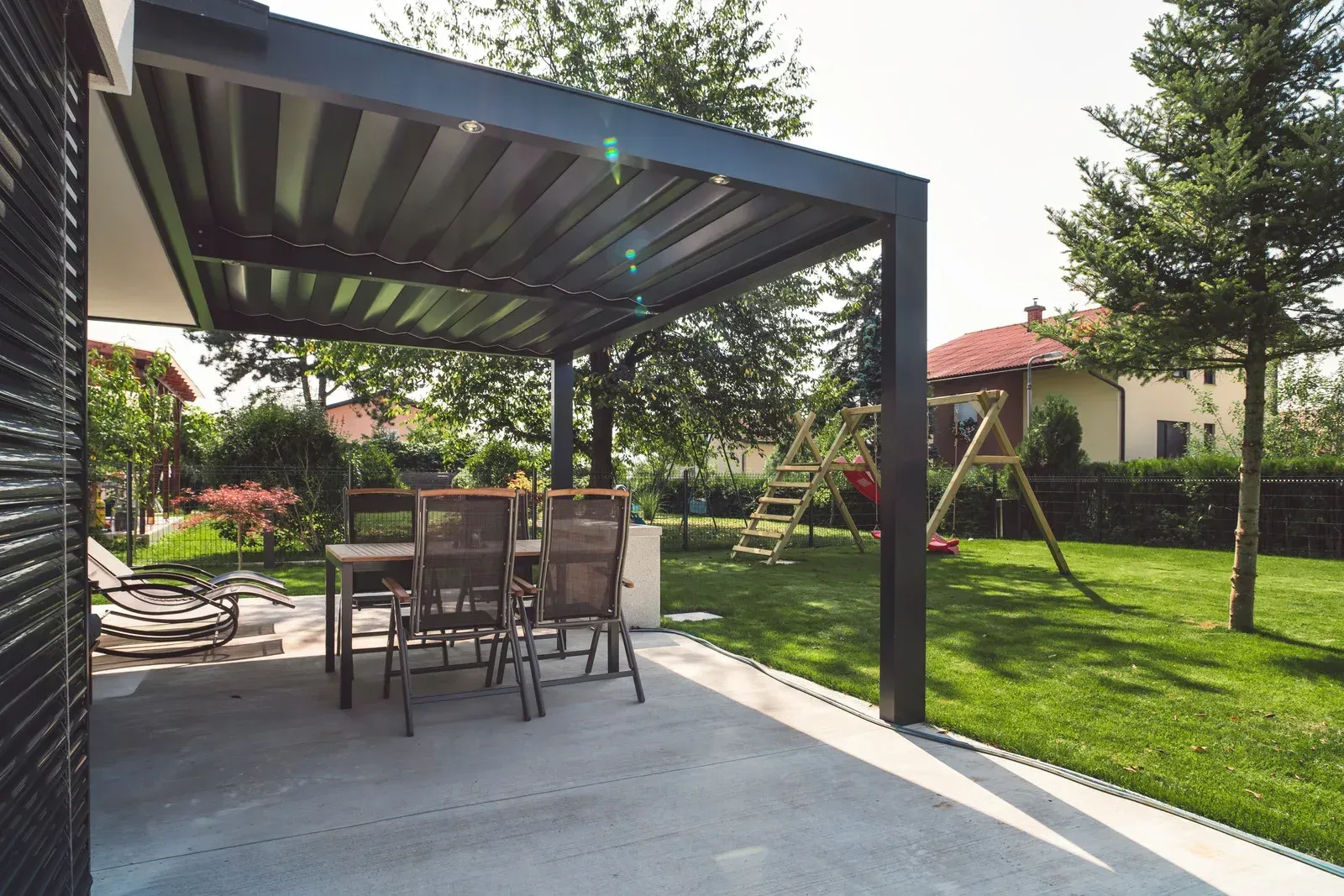
Concrete Patio Installation
An affordable, versatile outdoor surface poured to the shape your yard actually allows, with the pitch set for drainage and the edges detailed cleanly against lawn, deck, or paver borders.
STRUCTURE
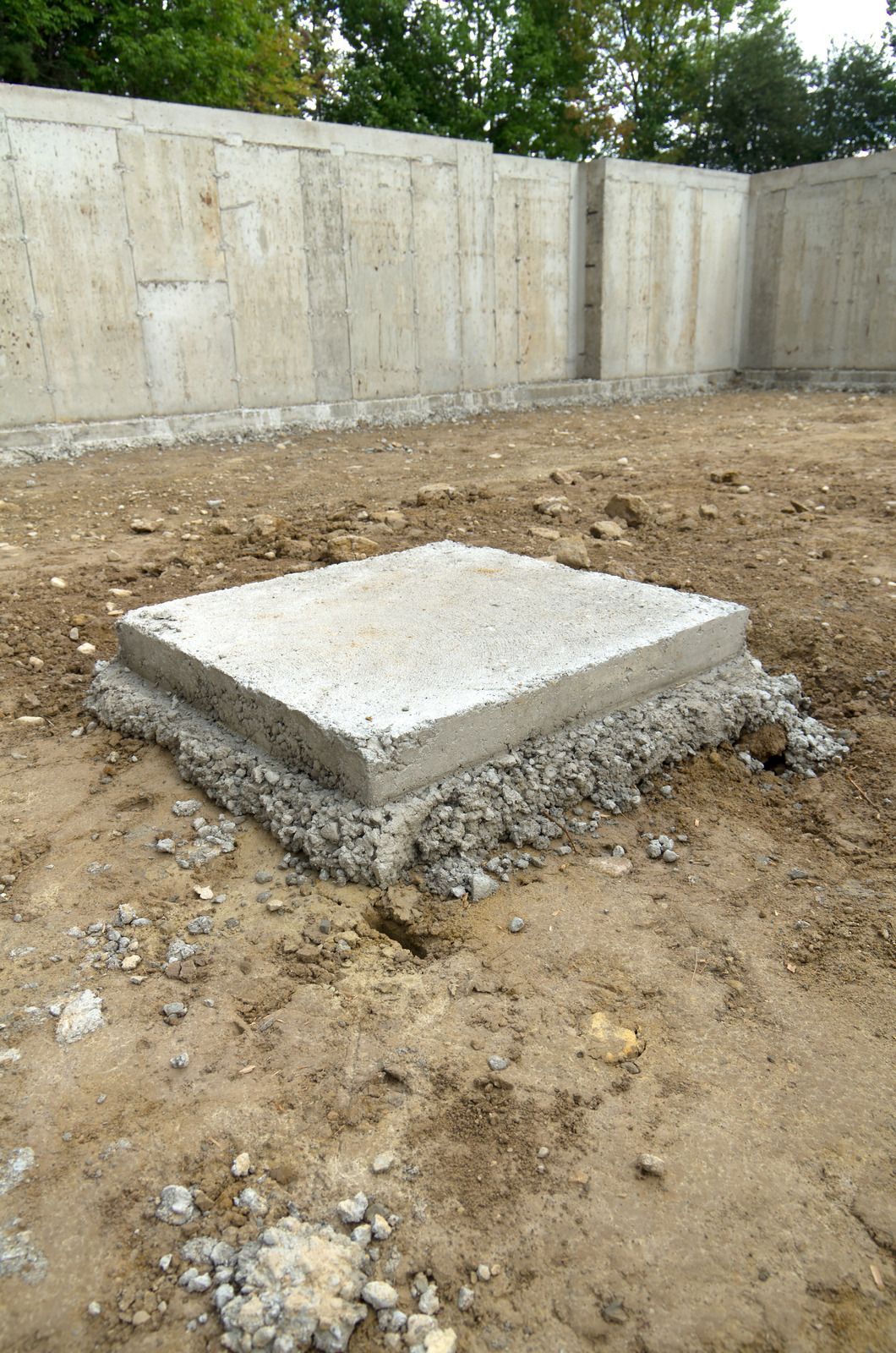
Concrete Footing Installation
Footings dug and poured below the frost line for decks, porches, posts, and additions, sized for the load they carry and inspected where the building department requires it before backfill.
STEPS
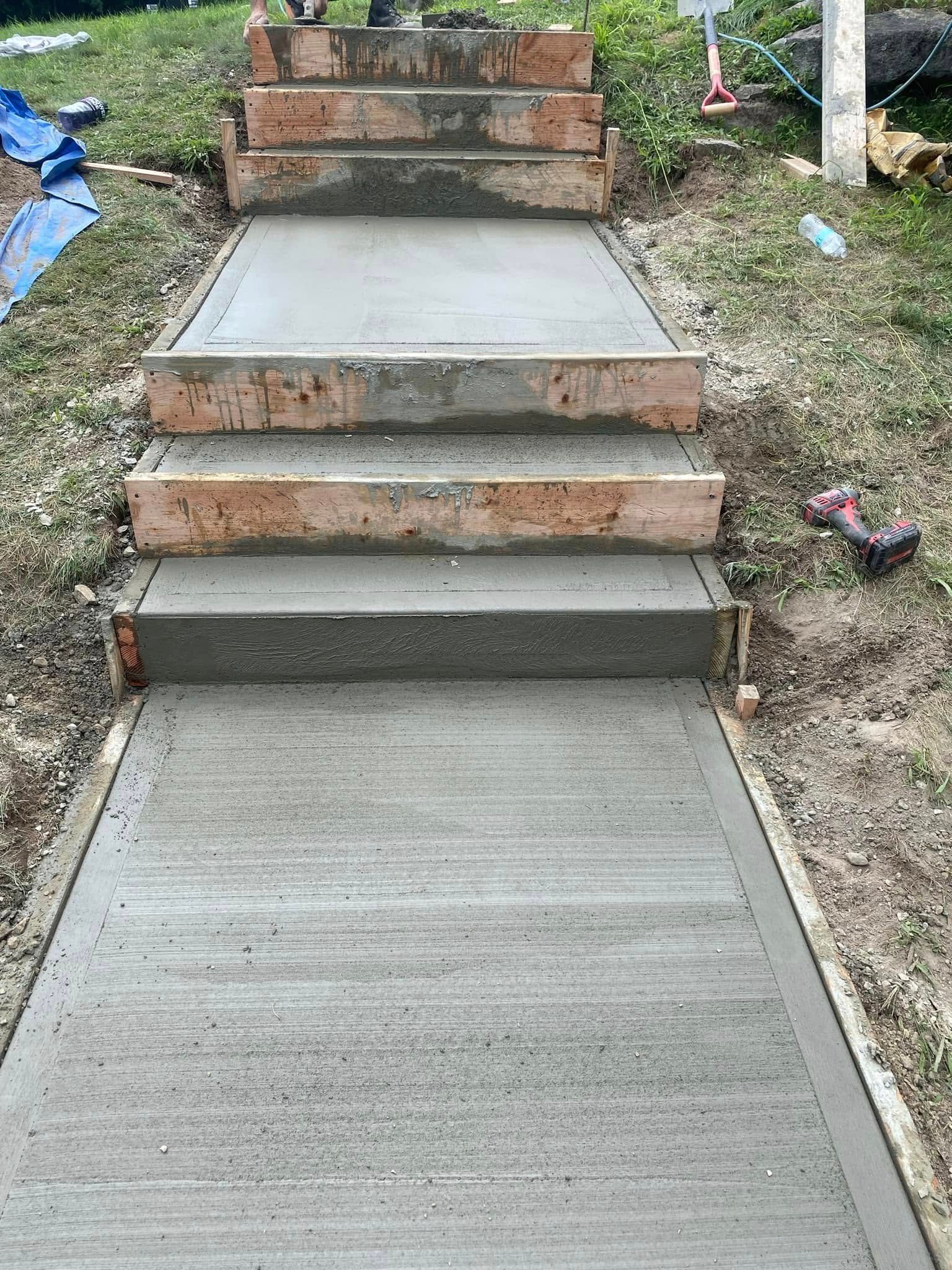
Concrete Step Installation
Front and rear steps formed with consistent riser heights and tread depths, tied to a footing that reaches proper depth, so the whole assembly does not separate from the house over time.
REPAIR
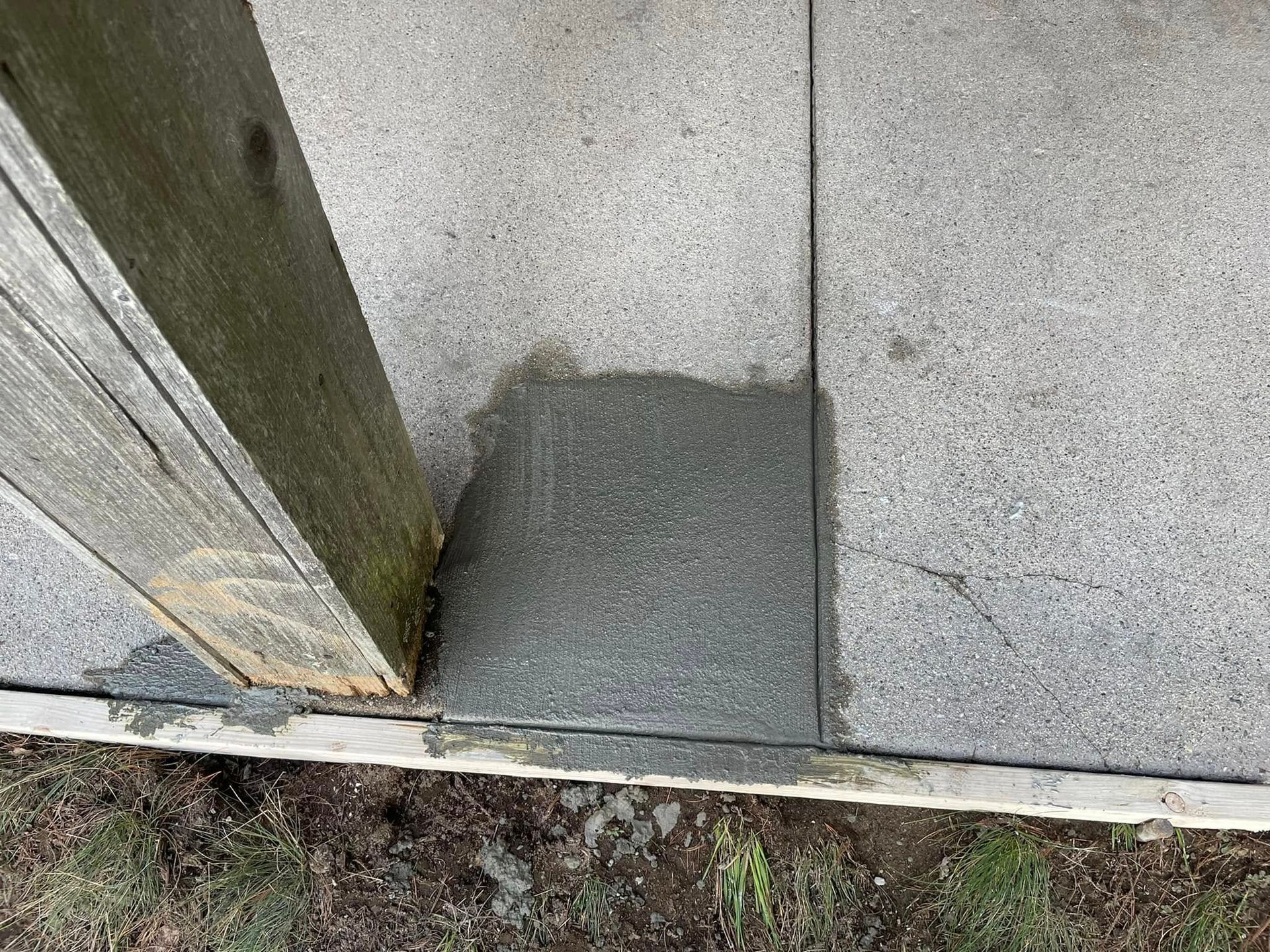
Concrete Foundation Repair
Cracks routed and filled, spalled or damaged sections cut out and replaced, and parging renewed. We look for the water source first, since repairing the symptom alone rarely holds for long.
THE WORD ON OUR WORK
WHAT OUR CLIENTS SAY.
Concrete customers care about two things: whether the crew shows up on the day the truck is scheduled, and whether the finished surface drains the right way. Kristina R. summed up her experience with us as reasonable rates, quick follow through, and showing up when we said we would.
Common Questions
FREQUENTLY ASKED QUESTIONS.
These questions come up on almost every concrete estimate we write. If yours is not covered, send it through our contact page and we will answer it directly.
How thick should a concrete driveway be?
Four inches is the standard minimum for cars and light trucks, and five inches or more wherever heavier vehicles park or turn. Slab depth matters a great deal, but the properly compacted base underneath that slab matters just as much.
Why does concrete crack and can it be prevented?
Concrete shrinks as it cures, so a degree of cracking is built into the material. Control joints, adequate thickness, a compacted base, and correct curing keep it confined to planned lines rather than letting it wander across the surface.
What is air-entrained concrete?
A mix carrying a chemical admixture that creates evenly spaced microscopic air bubbles throughout the paste. Those tiny voids give freezing water room to expand, which is why air entrainment is specified for exterior work in any climate that freezes.
How long before you can drive on new concrete?
Foot traffic is usually fine after a day or two. Wait roughly a week before driving cars on it. Bowden and Son LLC tells every customer in Dudley, MA exactly when their slab is ready, because concrete keeps gaining strength.
What are control joints and how far apart should they be?
Tooled or saw-cut grooves that give the slab a deliberate weak line to crack along. A common rule places them roughly every ten feet in each direction, cut at least a quarter of the slab depth, and cut early.
Can you pour concrete in cold weather?
It can be done with the right mix, insulating blankets, and protection, but the window narrows sharply once nights start dropping below freezing. In this area we deliberately schedule most flatwork between April and November for good reason.
Should a concrete driveway or patio be sealed?
Sealing helps considerably in a road salt and snowmelt climate. It slows water absorption, keeps stains from setting, and reduces surface scaling. After 30 years of pouring around Dudley, MA, Bowden and Son LLC treats it as basic maintenance.
Is rock salt safe on new concrete?
Not for the first winter. Deicers drive extra freeze and thaw cycling into a young surface and cause it to scale. Use sand for traction through that first season, and go easy on chloride products after that as well.
HOW WE WORK
FROM THE FIRST SHOVEL TO THE FINAL BROOM PASS.
STEP 01
Site Visit and Layout
We walk the area, check how water currently moves across it, look at access for a truck and a compactor, and mark out the shape and the elevations the finished surface has to hit.
STEP 02
Written Scope and Mix Specification
You get the dimensions, the slab thickness, the reinforcement, the mix design, and the surface finish in writing. Permits are identified at this stage rather than discovered later when an inspector happens to drive past.
STEP 03
Excavation and Base Preparation
We dig down to depth, remove any unsuitable material, then place and compact the gravel base in measured lifts. Footings go below the frost line wherever anything structural is being carried.
STEP 04
Forming and Reinforcement
Forms are set to line and to the pitch the drainage requires, then braced so nothing moves under the weight of wet concrete. Rebar or mesh is placed and supported off the base.
STEP 05
Pour, Finish, and Joint
Concrete is placed, screeded, floated, and broom finished inside the window the weather allows on the day. Control joints are then tooled or saw cut early, on a spacing matched to the slab thickness.
STEP 06
Cure, Strip, and Clean Up
The surface is protected while it cures, forms come off once it has gained strength, and the site is cleaned and graded back. We tell you exactly when it is ready for traffic.
Get Your Free Estimate
LET US LOOK AT THE GRADE FIRST. THE QUOTE IS FREE.
Concrete is not a product you can compare on price alone, because most of what you are buying is buried under the finished surface. We will walk the site with you, tell you where the water is going now, explain what depth and mix the job actually calls for, and put every one of those numbers in writing. Military discounts apply. Reach out through our contact page to book a visit.
WHAT YOUR CONCRETE QUOTE COVERS:
- Excavation, base material, and compaction
- Slab thickness and reinforcement specified
- Mix design suited to exterior exposure
- Forming, finishing, and joint layout
- Drainage pitch confirmed before the pour
- Site cleanup and grading afterward